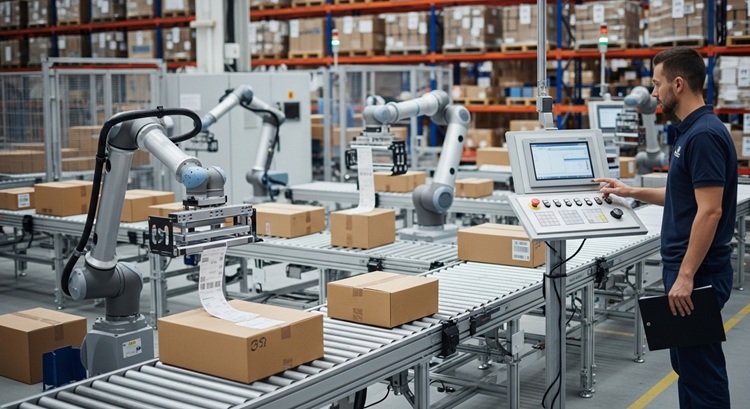
There is a moment, familiar to anyone who has stood inside a cavernous warehouse at dawn, when the scale of the operation reveals itself all at once – the towering rows of steel, the hum of forklifts warming up, and the quiet arithmetic of space. It is in places like these that drive in racking has quietly reshaped the logic of modern storage, turning every available cubic metre into productive capacity.
Table of Contents
The Architecture of Density
To understand why drive-in racking matters, you must first appreciate the problem it was designed to solve. A conventional warehouse, lined with selective racking and generous aisles, surrenders nearly half its floor space to the simple act of access. Forklifts need room to turn, operators need sightlines, and every row demands its own corridor.
Drive in racking dispenses with much of that arithmetic. The system consists of vertical uprights connected by horizontal rails at multiple levels, forming deep lanes into which forklifts drive directly to deposit or retrieve pallets. By eliminating the need for aisles between each row, the structure can occupy 60 to 80 percent more floor space than its selective counterpart. It is a deceptively simple idea that yields extraordinary results.
How the System Operates
The mechanics are straightforward, though the engineering behind them is anything but. Pallets rest on continuous rails running along both sides of each lane. A forklift enters the lane, lifts a pallet to the required level, and places it onto the rails before reversing out. The system operates on a last-in, first-out basis, meaning the most recently stored pallet is the first to be retrieved.
This LIFO principle is a defining characteristic, and it shapes the kinds of businesses that benefit most from the technology. Operations dealing in large volumes of identical products – beverages stacked by the thousand, building materials awaiting dispatch, packaged goods destined for retail shelves – find the arrangement perfectly suited to their rhythms.
The Compelling Case for Density
The advantages of deep lane pallet racking extend well beyond the obvious gain in floor space:
- Maximum space utilisation – Every square metre earns its keep, with storage density figures that would have seemed implausible a generation ago.
- Lower cost per pallet position – Fewer aisles translate directly into reduced real estate costs, a calculation that matters enormously in land-scarce Singapore.
- Ideal for bulk inventory – Products with low SKU counts but high volume find their natural home in these deep lanes.
- Deferred expansion – Higher density within existing premises can postpone or eliminate the need for costly warehouse relocation.
- Adaptable configuration – Lane depths and height levels can be tailored to the precise demands of the operation.
As Singapore’s founding Prime Minister Lee Kuan Yew once put it, “We have to make every square inch of Singapore count.” It is difficult to imagine a statement more perfectly aligned with the philosophy behind high-density warehouse storage.
Drive-In Versus Drive-Through
A distinction worth noting, and one that catches out even experienced logistics professionals, is the difference between drive-in and drive-through configurations. In a drive-in system, forklifts enter and exit from the same end, producing the LIFO rotation described above. In a drive-in and drive-through racking arrangement, lanes are accessible from both ends, enabling first-in, first-out stock movement.
The drive-through variant suits products with expiry dates or those requiring strict rotation discipline. However, because it demands access aisles on both sides, it sacrifices some of the density that makes the drive-in configuration so attractive. Most operators in Singapore, weighing the trade-offs, opt for drive-in unless FIFO rotation is non-negotiable.
Industries That Have Taken Notice
The appeal of high-density racking cuts across sectors, though certain industries have embraced it with particular enthusiasm:
- Cold storage and food distribution – Refrigerated space is expensive to build and costly to run. Maximising every metre of it is not a preference but an economic necessity.
- Manufacturing – Factories storing large batches of raw materials or finished products benefit from the dense, orderly layout.
- Third-party logistics – Warehousing providers, perpetually squeezed between client expectations and lease costs, achieve better returns per square metre with deep lane systems.
- Retail distribution – Seasonal merchandise and promotional stock, stored in bulk and dispatched in waves, fits the LIFO model naturally.
The Details That Determine Success
Like any well-engineered system, drive in racking rewards careful planning and punishes shortcuts. Lane depth is perhaps the most consequential design decision. Deeper lanes increase density but extend the time forklifts spend navigating to the far end. Most specialists recommend six to ten pallets deep as the practical sweet spot.
Ceiling height matters too. Taller installations store more pallets but demand specialised equipment and meticulous load management. And the warehouse floor itself must be level and robust enough to bear the concentrated loads the system imposes – an unglamorous detail that can make or break an installation.
Safety as a Discipline
Forklift contact with uprights and rails is more common in drive-in systems than in open-aisle racking, a reality that demands vigilance. Column protectors, guide rails, and end-of-aisle barriers reduce the risk of structural damage. Regular inspections catch bent uprights and cracked rails before they become hazards. And well-trained operators, comfortable with the precision required to navigate narrow lanes, are the single most important safeguard of all.
Conclusion
For businesses that store large quantities of similar products in limited space, drive in racking delivers results that are difficult to match by any other means. It is a technology born of constraint and refined by practice, turning the scarcity of warehouse space into a problem that can be solved rather than merely endured.