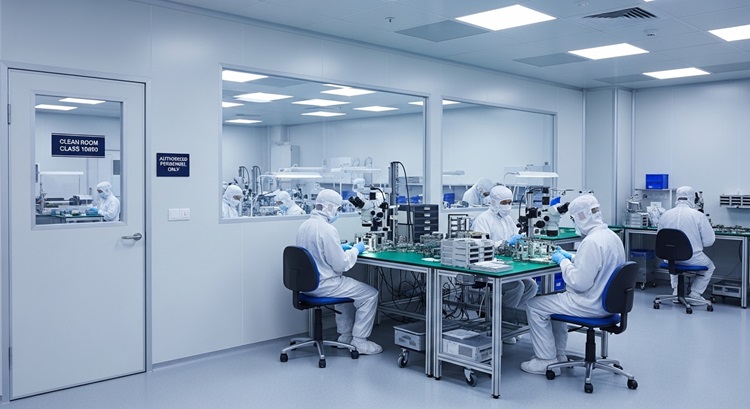
A clean room for medical devices is one of the most demanding environments that modern manufacturing has devised. It is a place where ordinary air becomes an engineering problem, where human presence must be managed like a variable in a controlled experiment, and where the distance between compliance and non-compliance can be measured in microns. Understanding what a proper compliance checklist looks like for these environments is not a procedural exercise. It is the foundation upon which safe medical products are built.
Table of Contents
The Logic Behind the Checklist
There is a particular satisfaction in a well-constructed checklist. It does not exist to burden the people working within a facility. It exists because memory is fallible, conditions change, and the consequences of oversight in a medical device clean room are not abstract. They appear downstream, in the form of product failures, regulatory findings, or, in the most serious cases, patient harm.
A compliance checklist for clean room medical device manufacturing organises what might otherwise be an overwhelming set of requirements into a coherent, repeatable structure. The checklist covers environmental conditions, physical infrastructure, personnel behaviour, monitoring routines, and documentation practices. Each element connects to the others in ways that make the whole system either robust or fragile, depending on how consistently it is followed.
Environmental Monitoring Requirements
The first area any compliance checklist must address is the monitoring of environmental conditions within the cleanroom for medical devices. This includes:
- Airborne particle counts at defined sampling locations, recorded at specified intervals
- Differential air pressure readings between clean zones and adjacent areas
- Temperature and humidity levels maintained within validated ranges
- Air change rates verified against design specifications for the relevant ISO classification
- HEPA and ULPA filter integrity testing conducted at documented frequencies
Singapore’s medical device clean room facilities operate robust environmental monitoring programmes aligned with ISO 14644-1 and ISO 14644-2, with many manufacturers running continuous automated particle monitoring systems in their most critical ISO Class 5 and Class 6 zones. This level of monitoring capability reflects the maturity of the regional industry and its alignment with international regulatory expectations.
Physical Infrastructure Checks
The built environment of a clean room facility for medical devices must be inspected and verified as part of any serious compliance programme. Infrastructure checks typically include:
- Visual inspection of wall, ceiling, and floor surfaces for damage, cracking, or particle-shedding deterioration
- Verification of airlock integrity and door seal condition
- Drainage and flooring inspection to ensure no contamination pooling risk
- Equipment and fixture surfaces checked for cleanliness and condition
- Lighting integrity verified to avoid particulate generation from degraded fittings
These checks are not one-time events. They are scheduled, documented activities that form part of the ongoing quality system for any manufacturer operating a medical device clean room environment.
Personnel and Gowning Compliance
Of all the elements on a compliance checklist for clean room medical device production, personnel management is the most dynamic. A facility can have perfectly functioning HEPA filtration and validated air change rates, yet still fail its contamination targets if its people are not properly trained and consistently supervised.
The gowning section of a compliance checklist should address:
- Gowning procedure qualification records for all personnel with clean room access
- Availability and condition of approved gowning materials (coveralls, gloves, masks, overshoes)
- Airlock entry and exit procedures followed in correct sequence
- Restriction of non-essential items from the clean room environment
- Regular retraining schedules and competency reassessments
The discipline required here is considerable. It demands that workers understand not just what the protocol requires, but why each step exists. A person who understands the contamination profile of their own body will gown more carefully than one who simply follows a posted instruction.
Cleaning and Disinfection Validation
A compliance checklist for clean room for medical devices manufacturing must include a dedicated section on cleaning and disinfection. This is an area where documentation requirements are particularly stringent under frameworks such as ISO 13485 and FDA 21 CFR Part 820.
Checklist items in this area typically include:
- Approved cleaning agents and disinfectants listed with current validation status
- Cleaning frequency schedules matched to zone classification and activity levels
- Rotation of disinfectants to prevent microbial resistance development
- Operator training records for cleaning procedures
- Cleaning logs maintained with date, time, operator, and product details
Singapore’s medical device cleanroom sector has developed strong industry practice around cleaning validation, with many facilities conducting microbiological surface monitoring as a routine supplement to their particle count programmes.
Documentation and Change Control
Compliance in a clean room for medical device manufacturing is ultimately demonstrated through documentation. A checklist that is completed but not recorded is a checklist that, from a regulatory perspective, was never completed at all.
Documentation requirements include current versions of all standard operating procedures, completed and signed monitoring logs, equipment calibration and maintenance records, deviation reports and associated corrective actions, and change control records for any modifications to the facility, process, or materials.
Change control deserves particular attention. Any modification to a medical device clean room, whether it involves a new piece of equipment, a revised cleaning agent, or a layout change, must pass through a formal assessment to determine whether it could affect validated conditions. The checklist serves as the audit trail that demonstrates this discipline has been maintained.
Conclusion
A compliance checklist for a clean room for medical devices is not a document that sits in a drawer until an auditor arrives. It is a living instrument, updated as regulations evolve, as equipment ages, and as the products being manufactured change. The manufacturers who treat their checklists with this seriousness, whether operating at ISO Class 5 or ISO Class 8, in Singapore or elsewhere, are the ones who consistently maintain the standards that a clean room for medical devices demands.