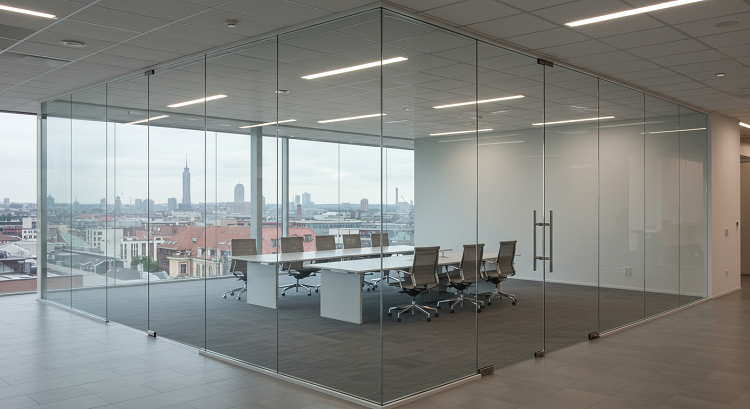
Creating dynamic workspaces is not just about design. It is also about giving people choices. Offices today are not made to be static. These spaces must change as needs change. That is why smart space solutions are gaining attention. One of the most effective tools is the use of sliding glass walls. These help make offices open yet private. With this system in place one room can do many jobs.
Table of Contents
The Rise of Adaptive Workspaces
Modern offices need flexibility more than ever. An open floor plan looks nice and feels fresh. But it does not always help people focus. In some moments silence is needed. In others collaboration is the goal. The solution is simple. It is to make the same space behave in different ways. That is how companies save space and still meet various work needs.
The Role of Sliding Glass Walls
Glass walls do more than divide. They shape the mood of the room. These walls let light flow from one side to another. The open feel stays but noise and distraction stay out. The best part is that they can be moved easily. Demountable sliding glass doors are designed for change. These can be installed fast and removed later if needed. That makes them perfect for growing teams.
The look of glass also adds a clean and modern touch. These walls do not block the eye. They frame the space instead. It feels open but offers some level of privacy too. These create the balance that most teams need today. The beauty of this idea lies in its subtle power.
From Meeting Rooms to Private Corners
Sliding glass walls can be used in many ways. They can make large rooms into small zones. A meeting room in the morning can become a quiet booth by noon. Then it may turn into a shared desk space again. These walls are built for change. This allows each area to serve many people and many tasks. The flexibility is not only in layout. It also helps in purpose. A single room no longer has one job. With these systems the same space can take on new roles daily. This brings value to the workplace. It also adds comfort and clarity to how people work.
Visual Flow with Clear Boundaries
Office design often has to balance light with silence. Sliding glass walls bring both at once. Light moves through the space freely. But work areas still feel defined. These boundaries are soft to the eye. But strong enough to create focus. This dual nature of glass creates a space that feels alive. There is a sense of flow in such offices. Movement is easy. Views are wide. And every part feels part of the whole. But when quiet is needed it can be found. With a simple shift of a panel a team can find calm. That is the power of these flexible barriers.
Conclusion
A dynamic space is not built once and left. It is shaped and reshaped with time. Sliding glass walls give teams the tools to do that with ease. These systems allow one space to serve many roles. They offer clarity and comfort without closing off the flow. From open zones to private retreats the journey is smooth and smart.